Reader map: Start with this guide to Pottery making history of Avanos, then use the related guides below to connect the place or theme with nearby routes, regional context, history, culture, and practical trip planning.
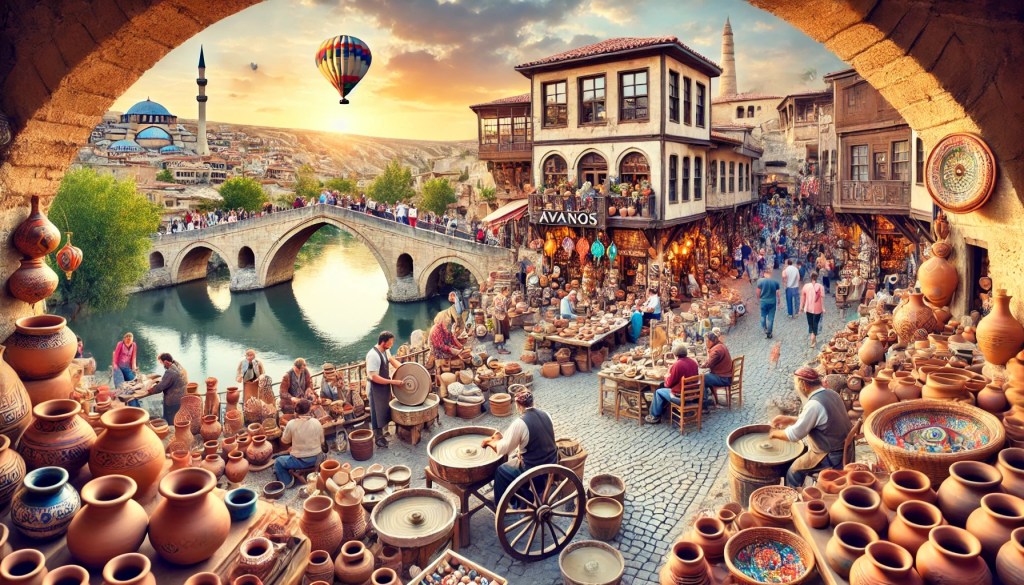
Avanos, a town in the Cappadocia region of Turkey, has a rich history in pottery making that dates back to the Hittite period, around 2000 BC. This tradition has been sustained over millennia due to the presence of the Kızılırmak River, which provides the red clay used in the pottery.
Historically, Avanos pottery was utilitarian, created primarily for daily use such as cooking, storage, and carrying water. Over time, the techniques and styles evolved, influenced by various cultural dominations in the region, including Phrygian, Persian, Roman, and Ottoman influences. Each of these periods left their mark on the styles of pottery, introducing new forms, decorations, and glazing techniques.
In the Ottoman period, Avanos potters began producing more ornate pieces and decorative items, reflecting the period’s artistic preferences. Today, the town’s pottery artisans are known for their skills in both traditional methods and modern ceramic arts. They use ancient techniques, such as the kick wheel and natural dyes, to create both traditional and contemporary pieces, often featuring intricate hand-painted designs.
The pottery of Avanos is not only an important aspect of the town’s cultural heritage but also a significant attraction for tourists, who can visit workshops to observe the potters at work and even try their hand at the wheel. This ongoing tradition connects the modern town to its ancient past, making it a living museum of ceramic art.
Avanos pottery in context
This pottery history note works best alongside the broader Avanos guide, which places the craft beside the Kizilirmak River, local neighborhoods, food traditions, and nearby landscapes. For nearby heritage context, compare the rock-cut village of Zelve and the engineered spaces of Ozkonak Underground City.
How to choose an Avanos pottery experience
Avanos pottery is most meaningful when you see the full chain: clay from the Kızılırmak environment, workshop preparation, wheel shaping, drying, firing, glazing, and decoration. A quick demonstration is fun, but a slower workshop visit helps you understand why the town has kept its ceramic identity for so long.
Questions to ask before you buy or book
- Is it hands-on? Some stops are demonstrations only, while others let visitors try the wheel.
- Where is it made? Ask whether the piece was made locally in Avanos or sourced elsewhere.
- How is it fired and shipped? If you make a piece, confirm whether it can be fired, glazed, and shipped later.
- What style is it? Traditional utility forms, decorative plates, tiles, and modern studio ceramics can all be sold under the same broad pottery label.
Best route pairing
Make pottery the anchor of an Avanos day, then add the riverfront, Zelve, Paşabağ, Çavuşin, or Devrent Valley. This keeps the craft experience connected to the landscape that supplied the clay and supported the town’s workshop culture.