
Important note: This website is for informational use only. We do not sell any tours or provide any services other than information about Cappadocia.
Cappadocia, a historical region located in central Anatolia (modern-day Turkey), has been home to numerous civilizations throughout history. The unique geological formations of Cappadocia, combined with its strategic location, have attracted various peoples over millennia. Here’s a brief overview of some of the major ancient civilizations that have inhabited or influenced the region:
1. Hittites (c. 1600–1180 BC): One of the earliest known civilizations to dominate the region, the Hittites established a powerful kingdom with its capital in Hattusa (modern-day Boğazkale). Their control over Cappadocia was significant for trade and as a buffer against other ancient powers.
2. Phrygians (c. 1200–700 BC): After the fall of the Hittite Empire, the Phrygians, possibly originating from the Balkans, moved into the region. The most famous Phrygian king is Midas, around whom many legends revolve.
3. Persians (c. 550–332 BC): The Achaemenid Persians, under Cyrus the Great and his successors, conquered much of Anatolia, including Cappadocia. The region became one of the satrapies (provinces) of the vast Persian Empire.
4. Alexander the Great and the Hellenistic Period (c. 332–63 BC): Alexander’s conquests brought the region under Macedonian control. After his death, Cappadocia was contested by his successors, the Diadochi, and eventually became an independent kingdom with heavy Greek cultural influences.
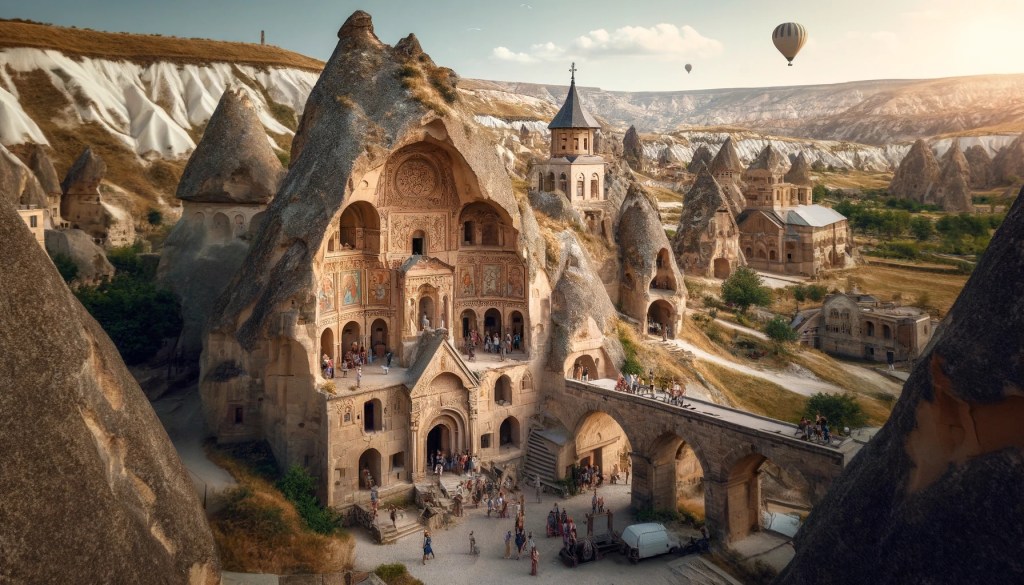
5. Romans (63 BC–330 AD): The Roman general Pompey annexed Cappadocia for Rome. As a province of the Roman Empire, the region saw the spread of Christianity. The soft tuff rock of Cappadocia made it suitable for early Christian communities to carve out churches and monasteries, many of which can still be seen today.
6. Byzantines (330–1071 AD): As the western part of the Roman Empire declined, the eastern half, known as the Byzantine Empire, persisted. Cappadocia became a vital frontier region for the Byzantines, especially against the encroaching Muslim empires. The underground cities and rock-cut churches of Cappadocia became refuges for Christians during periods of Arab raids.
7. Seljuks (1071–1300s AD): After the Battle of Manzikert in 1071, the Seljuk Turks began to dominate Anatolia, including Cappadocia. They introduced Islamic culture and art to the region, and many caravanserais (inn-like structures) from this period still stand. These are some of the primary ancient civilizations that left their mark on Cappadocia. Throughout its history, the region has been a melting pot, absorbing influences from each dominating power and creating a rich tapestry of cultures, languages, and religions. The landscape, riddled with fairy chimneys, caves, and unique rock formations, stands as a testament to the adaptability and resilience of the many peoples who have called Cappadocia home.
Traveling to Turkey offers a blend of rich history, diverse cultures, delectable cuisine, and stunning landscapes. Here are some tips for travelers to Turkey:
1. Visa Requirements: Before you go, check the visa requirements for your nationality. Many visitors can get an e-Visa online, but requirements can change.
2. Money: The official currency is the Turkish Lira (TRY). While credit cards are widely accepted in cities, it’s advisable to have some cash, especially if visiting rural areas or local bazaars.
3. Language: Turkish is the official language. English is spoken in many tourist areas, but learning a few basic Turkish phrases can enhance your experience and is appreciated by locals.
4. Dress Respectfully: Turkey is a predominantly Muslim country. When visiting religious sites like mosques, dress modestly. Women should bring a scarf to cover their heads, and both men and women should wear clothing that covers their shoulders and knees.
5. Cuisine: Turkish cuisine is diverse and delicious. Try dishes like kebabs, baklava, mezes, and Turkish delight. Don’t forget to experience a traditional Turkish breakfast and drink Turkish tea or coffee.
6. Safety: Turkey is generally safe for tourists. However, like anywhere, always be cautious about pickpockets in crowded areas and be aware of your surroundings.
7. Public Transportation: In cities like Istanbul, public transportation is efficient. The metro, trams, and buses are great ways to get around. Dolmuş (shared taxis) are a popular mode of transport in many areas.
8. Cultural Etiquette: When greeting, a handshake is common. Being punctual is appreciated. When visiting someone’s home, bringing a small gift is a kind gesture.
9. Shopping: Haggling is common in bazaars and markets. Starting at half the asking price and bargaining from there is a typical approach.
10. Tipping: In restaurants, leaving a tip of 5-10% is appreciated but not obligatory. For small services like luggage assistance, a small tip is a kind gesture.
11. Accommodation: Apart from hotels, consider staying in traditional accommodations like “pansiyons” (guesthouses) or “cave hotels” in Cappadocia.
12. Sights & Destinations: While Istanbul, Cappadocia, Ephesus, and Pamukkale are top destinations, consider visiting places like Antalya, Izmir, Trabzon, and other less-touristy locales for a more authentic experience.
13. Sim Card: Getting a local SIM card for mobile data and calls can be very useful. They’re available at the airport and many local shops.
14. Stay Hydrated: Especially in summer, the weather can be hot, particularly in the inland areas. Drink plenty of water and wear sunscreen.
15. Time Zone: Turkey operates on Turkey Standard Time (TRT), which is 3 hours ahead of Coordinated Universal Time (UTC+3).
16. Local Customs: Turkish people are hospitable. If you’re offered a gift or refreshment, it’s polite to accept. Refusing might be seen as disrespectful.
Turkey offers an abundance of experiences, from its Mediterranean beaches to its mountainous eastern regions. Whether you’re wandering the streets of Istanbul or floating above Cappadocia in a hot air balloon, respect for the local culture and customs will ensure a richer and more memorable journey. When traveling to Turkey, it’s essential to be aware of emergency numbers for various services.
Here’s a list of important phone numbers for Turkey:
1. Emergency: – 112 (General emergency line, similar to 911 in the U.S.)
2. Police: – 155
3. Gendarmerie (Military branch responsible for rural security): – 156
4. Fire Brigade: – 110
5. Ambulance: – 112
6. Forest Fire: – 177
7. Natural Gas Emergency: – 187
8. Coast Guard: – 158
9. Tourist Police: – Depending on the city, there may be a specific department for tourist police. It’s advisable to check with local tourism offices or your hotel for this information when you arrive.
10. Directory Assistance: – 118xx (The “xx” varies depending on the service provider.)
11. Electricity Emergency: – 186
Remember that while the above numbers are essential, the general emergency number (112) can always be dialed for various emergencies, and they should be able to direct you to the specific service you need. It’s a good idea to have these numbers saved in your phone or written down somewhere accessible when you travel. Additionally, always inform someone about your whereabouts and plans when traveling in a foreign country.
Reaching Cappadocia, located in central Turkey, can be done in several ways, depending on your starting point and preference. Here are the common methods to reach this unique destination:
1. By Air:
– Nevşehir Kapadokya Airport (NAV): This is the closest airport to Cappadocia and is about 30 km away from Göreme, one of the central towns in Cappadocia. There are direct flights to Nevşehir from Istanbul, and the frequency varies depending on the season.
– Kayseri Erkilet Airport (ASR): Located in Kayseri, this airport is about 70 km from Göreme. It’s larger than the Nevşehir airport and has more frequent flights from Istanbul and other major Turkish cities.
– From both airports, you can take a taxi, rent a car, or use shuttle services (often offered by hotels or tour agencies) to reach Cappadocia.
2. By Bus:
– Many long-distance bus companies operate routes to Nevşehir and Göreme from cities like Istanbul, Izmir, and Ankara. Overnight buses from Istanbul to Cappadocia are quite common. Once you arrive at the bus station, you can use local taxis or minibuses to reach your final destination.
3. By Train:
– While there’s no direct train to Cappadocia, you can take a train to Kayseri and then continue by bus or taxi. The train might be a scenic and relaxing option, but it’s not the fastest.
4. By Car:
– If you’re renting a car, you can drive to Cappadocia. It offers flexibility and the opportunity to explore some off-the-beaten-path locations. However, be prepared for a long drive if you’re starting from coastal cities or Istanbul.
5. Tour Packages:
– Many travel agencies offer tour packages to Cappadocia from various parts of Turkey. These often include transportation, accommodation, and guided tours. Note: If you’re arriving by air, particularly during the tourist season, it’s a good idea to book your airport transfer in advance. Whether you’re using a shuttle service or a taxi, having a pre-arranged pickup can save you time and hassle. Lastly, consider the time of year you’re visiting. Cappadocia is beautiful year-round, but its appearance changes from season to season. From snow-capped fairy chimneys in winter to the vibrant hues of summer, each season offers a unique experience.
| Data / Statistics are not available. |