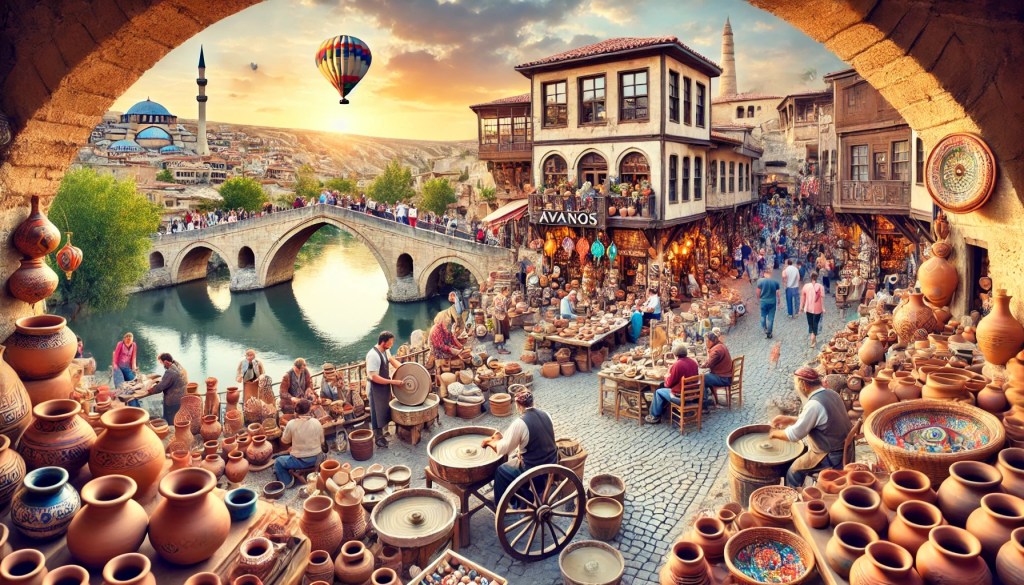

Avanos, a town in the Cappadocia region of Turkey, has a rich history in pottery making that dates back to the Hittite period, around 2000 BC. This tradition has been sustained over millennia due to the presence of the Kızılırmak River, which provides the red clay used in the pottery.
Historically, Avanos pottery was utilitarian, created primarily for daily use such as cooking, storage, and carrying water. Over time, the techniques and styles evolved, influenced by various cultural dominations in the region, including Phrygian, Persian, Roman, and Ottoman influences. Each of these periods left their mark on the styles of pottery, introducing new forms, decorations, and glazing techniques.
In the Ottoman period, Avanos potters began producing more ornate pieces and decorative items, reflecting the period’s artistic preferences. Today, the town’s pottery artisans are known for their skills in both traditional methods and modern ceramic arts. They use ancient techniques, such as the kick wheel and natural dyes, to create both traditional and contemporary pieces, often featuring intricate hand-painted designs.
The pottery of Avanos is not only an important aspect of the town’s cultural heritage but also a significant attraction for tourists, who can visit workshops to observe the potters at work and even try their hand at the wheel. This ongoing tradition connects the modern town to its ancient past, making it a living museum of ceramic art.