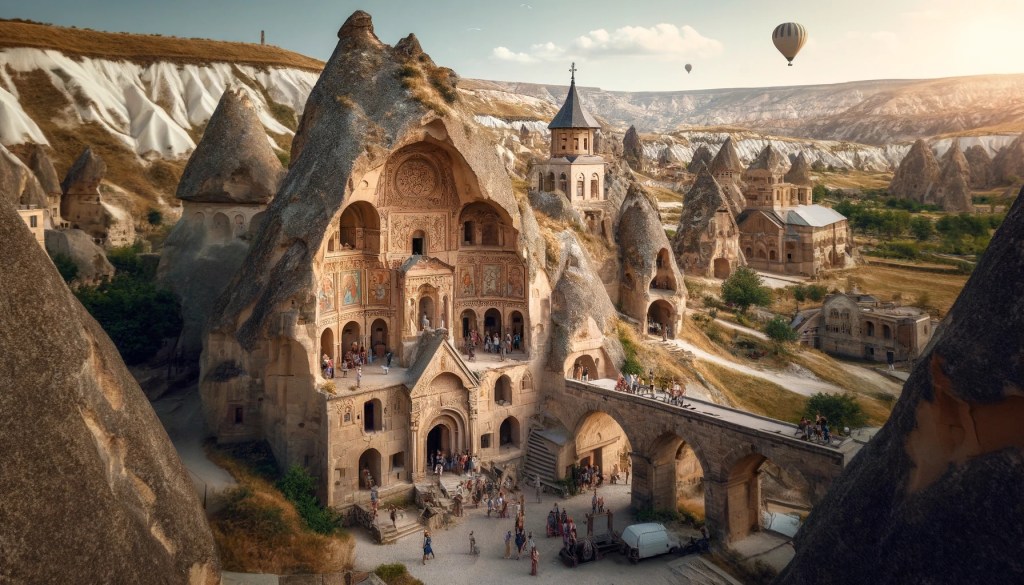

The underground cities of Cappadocia in Turkey are a fascinating example of ancient engineering and urban planning. These subterranean complexes were primarily built during the Byzantine era for protection against invasions. The most famous of these, Derinkuyu and Kaymaklı, could each shelter thousands of people along with their livestock and food stores.
These cities are composed of multiple levels dug deep into the soft volcanic rock of the region. The levels are connected by tunnels and include various communal living spaces, such as kitchens, stables, churches, and schools. They also have sophisticated ventilation shafts and could be sealed off from the inside with large stone doors.
The construction of these cities is thought to have begun as early as the 8th–7th centuries BC, and they were used through the Middle Ages. The ability to live underground for extended periods was crucial during times of siege or raids, providing a safe retreat for the inhabitants of Cappadocia. Today, these cities are popular tourist attractions, offering a glimpse into the innovative survival strategies of past civilizations.